



News
NEWS CENTER
17
2026
-
06
Practical Guidelines for the Safe Storage and Use of High-Surface-Area Calcium Hydroxide: A Compilation of Operational Tips
Author:
Latest News
2026-06-18
Industry Trend Analysis: Prospects for the High-Specific-Surface-Area Calcium Hydroxide Market
As national ecological and environmental policies continue to tighten, industrial green transformation accelerates, and regulatory standards across various sectors are steadily upgraded, high‑specific‑surface‑area calcium hydroxide— a green, highly efficient, functional calcium‑based material— is seeing sustained growth in market demand. The industry boasts broad prospects and is poised to increasingly replace traditional low‑end lime and costly chemical feedstocks.
2026-06-17
Practical Guidelines for the Safe Storage and Use of High-Surface-Area Calcium Hydroxide: A Compilation of Operational Tips
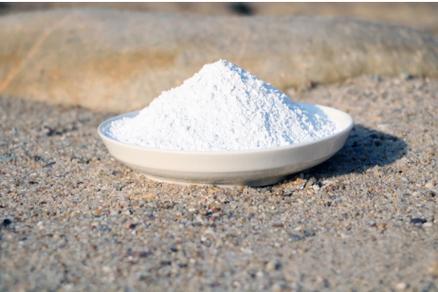
High‑specific‑surface‑area calcium hydroxide boasts excellent performance; however, as a highly reactive ultrafine powder, its storage and application methods directly affect its activity and efficacy. Mastering sound practical techniques enables you to maximize product performance, minimize losses and waste, ensure consistent treatment outcomes, and adapt to a wide range of industrial operating conditions.
2026-06-16
In-Depth Competitive Comparison: Why High-Surface-Area Calcium Hydroxide Is Better Suited for Industrial Applications
In the field of industrial environmental protection, high‑specific‑surface‑area calcium hydroxide, ordinary calcium hydroxide, and baking soda are the three mainstream raw materials for desulfurization and neutralization, each exhibiting distinct differences in performance, cost, and application scenarios. A comprehensive comparison clearly highlights the overall advantages of high‑specific‑surface‑area calcium hydroxide, helping enterprises make precise selections to match their specific needs.
2026-06-14
Renewing Farmland: A Practical Guide to the Ecological Application of High-Surface-Area Calcium Hydroxide for Soil Amendment
Long-term overuse of chemical fertilizers in modern agriculture has led to soil acidification, compaction, and microbial imbalance in most cultivated fields, severely compromising crop yield and quality. High‑specific‑surface‑area calcium hydroxide, as a premium ecological soil conditioner, leverages its high activity and excellent bioavailability to serve as a key ingredient for restoring acidic soils and enhancing the quality and productivity of farmland, making it suitable for a wide range of soil‑improvement applications across various crops.
2026-06-13
Water Treatment and Quality Enhancement: The Practical Value of High-Specific-Surface-Area Calcium Hydroxide in Wastewater Treatment
In industrial wastewater treatment, high‑specific‑surface calcium hydroxide is a multifunctional environmental protection agent that simultaneously neutralizes acids and bases, removes heavy metals, promotes flocculation and sedimentation, and purifies water quality. It is widely used in the treatment of effluents from industries such as chemical manufacturing, electroplating, textile dyeing, and metallurgy, delivering performance far superior to conventional agents like ordinary lime and caustic soda.
