



News
NEWS CENTER
28
2025
-
10
Efficient Purification, Contributing to Blue Skies: Innovative Application of Wanda Tech's High-Specific-Surface Calcium Hydroxide in Flue Gas Desulfurization
Author:
With the continuous tightening of national environmental policies and the advancement of the "Dual Carbon" goals, industrial flue gas treatment, particularly the reduction of sulfur dioxide (SO₂), has become a critical challenge for many energy-intensive industries. Among various desulfurization technologies, dry/semi-dry flue gas desulfurization (FGD) is widely used in sectors like steel, building materials, and waste incineration due to its simple process, no wastewater discharge, and relatively lower investment costs. The quality of calcium hydroxide (Ca(OH)₂), the core reagent in this technology, directly determines the final efficiency of the desulfurization system. Wanda Technology, deeply engaged in the field of environmental protection materials, produces high-specific-surface-area calcium hydroxide through dedicated R&D. This product is becoming a key force in promoting clean flue gas emissions due to its exceptional performance.
I. Core Technology: Why is "High Specific Surface Area" the Key to Success?
The reaction between calcium hydroxide and SO₂ during flue gas desulfurization is a typical gas-solid phase reaction. Its efficiency is closely related to the physicochemical properties of the reagent, with "Specific Surface Area" being the core indicator measuring its reactivity.
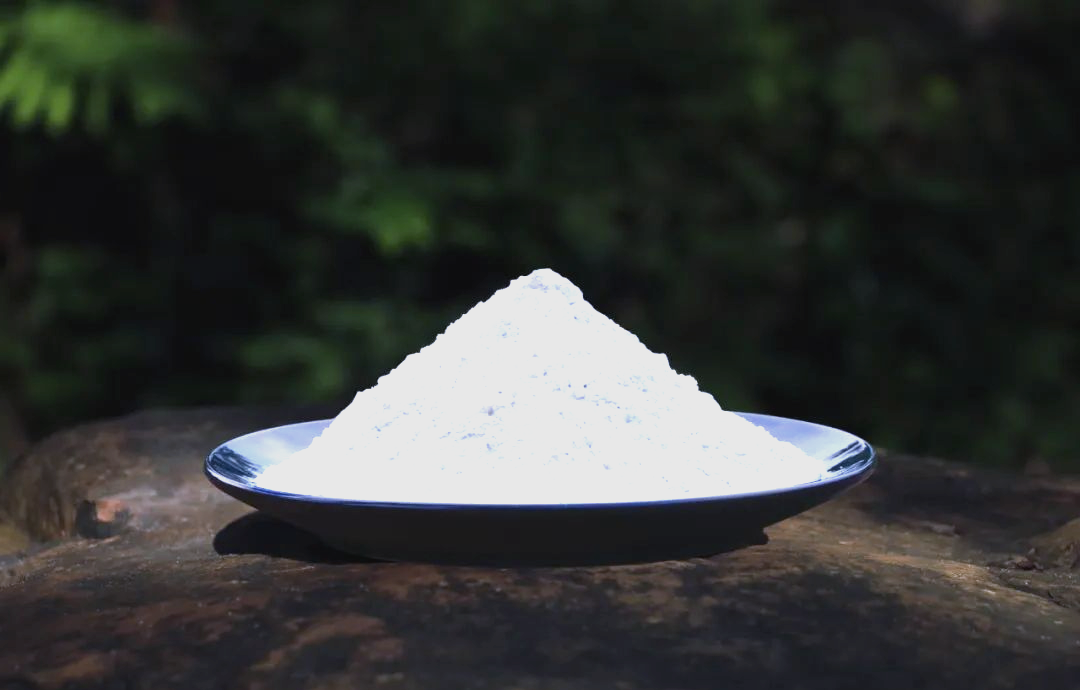
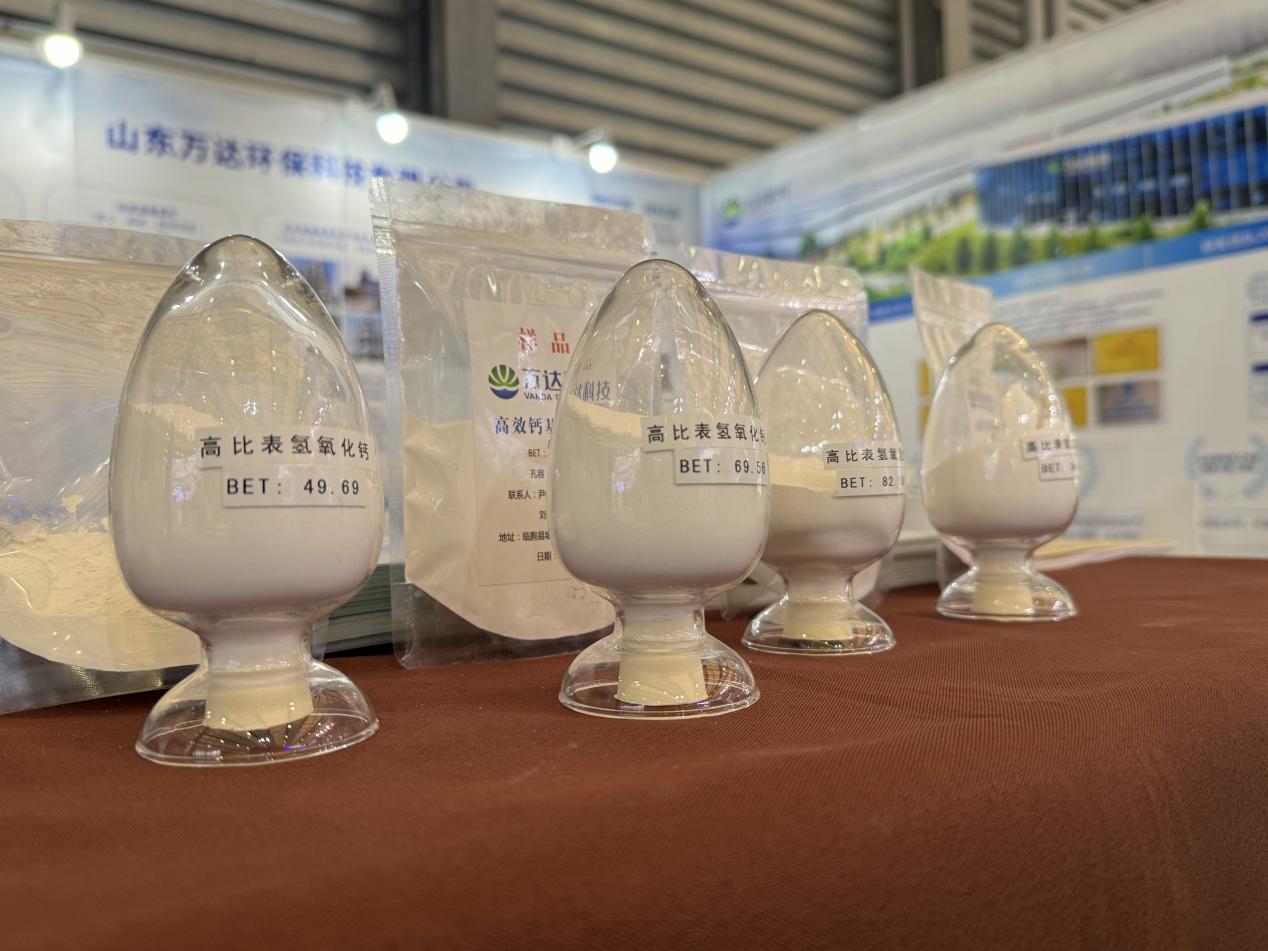
Wanda Tech's high-specific-surface calcium hydroxide, produced through a unique process, forms porous, loose micro-nano scale particle structures. This gives it a total surface area per unit mass far exceeding that of ordinary calcium hydroxide. This means:
- Exceptionally High Reactivity: The vast specific surface area provides countless contact and reaction sites for SO₂ molecules. Analogous to crushing dense rock into loose sand, this significantly accelerates the chemical reaction rate, making desulfurization faster and more thorough.
- Significantly Improved Desulfurization Efficiency: The high reactivity leads to a stronger capacity for capturing and neutralizing SO₂. It can easily handle flue gas with high concentrations and fluctuating conditions, helping enterprises stably meet and exceed the national ultra-low emission standards (SO₂ < 35 mg/m³).
- Reduced Material Consumption and Solid Waste: More complete reactions mean higher utilization rate of the calcium hydroxide, effectively lowering the unit desulfurization cost. Simultaneously, the reduction in unreacted core material directly decreases the generation of desulfurization by-products, achieving both economic and environmental benefits.
II. Application Scenarios: Empowering Multiple Mainstream Desulfurization Processes
Wanda Tech's high-specific-surface calcium hydroxide demonstrates outstanding performance in various mainstream dry/semi-dry desulfurization processes due to its excellent adaptability:
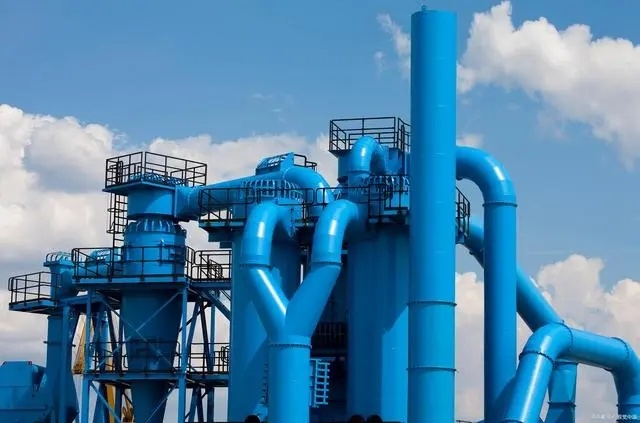
- Circulating Fluidized Bed (CFB) Desulfurization: In this process, the high-specific-surface calcium hydroxide powder and atomized water form an intensely turbulent fluidized state with the flue gas in the reaction tower. Its high reactivity ensures efficient mass transfer and reaction within a short residence time, leading to stable system operation and producing dry powder by-products that are easy to handle.
- Spray Dry Absorption (SDA): The high-specific-surface calcium hydroxide is formulated into a slurry and then atomized. Its excellent solubility and reactivity result in stable slurry properties and effective atomization, enabling efficient SO₂ removal while moisture evaporates, and effectively preventing tower wall scaling and nozzle clogging.
- Dry Sorbent Injection (DSI): As a simple and effective enhancement measure, the dry powder is directly injected into the duct. Even without a complex reaction tower, the high-specific-surface calcium hydroxide can achieve considerable desulfurization efficiency due to its high reactivity. It is widely used in small and medium-sized boilers or as a safeguard for advanced end-of-pipe treatment.
III. Demonstrated Value: Creating Comprehensive Benefits for Customers
Choosing Wanda Tech's high-specific-surface calcium hydroxide is not just selecting a product, but opting for an efficient desulfurization solution:
- Ensures Environmental Compliance: Provides solid technical support for enterprises' green and sustainable development, ensuring long-term stable compliance with flue gas emission standards.
- Optimizes Economic Benefits: Effectively reduces the overall operational costs throughout the lifecycle by lowering reagent consumption and waste disposal expenses.
- Enhances System Stability: The product has good flowability and is less prone to moisture absorption and caking, ensuring smooth operation of the conveying system and long-term reliability of the entire desulfurization system.

Conclusion
In an era demanding precise and scientific pollution control, innovation in environmental protection materials is a crucial engine driving industrial upgrading. Wanda Tech's high-specific-surface calcium hydroxide precisely addresses the pain points and challenges in the field of flue gas desulfurization by anchoring its core technology. It is not only a powerful tool for achieving ultra-low emissions but also a reliable partner for enterprises on their path towards high-quality and green development, contributing significant technological strength to safeguarding our shared blue skies and white clouds.
Latest News
2026-09-10
Application of High-Specific-Surface-Area Calcium Hydroxide in Flue-Gas Desulfurization for Industrial Kilns in the Chemical Industry
In the chemical industry, flue gases from various reaction kilns and heating furnaces are highly complex; in addition to sulfides, they often contain small amounts of acidic organic compounds. These flue gases are highly corrosive, and conventional desulfurization agents exhibit limited reactivity and poor corrosion resistance, resulting in only modest treatment performance. High‑specific‑surface‑area calcium hydroxide can achieve simultaneous desulfurization and deacidification, making it well suited to the complex flue‑gas conditions encountered in chemical processes.
2026-09-07
Application of High-Specific-Surface-Area Calcium Hydroxide in Flue Gas Desulfurization in the Refractory Materials Industry
Refractory‑material tunnel kilns and shuttle kilns operate at high temperatures and produce uneven flue‑gas emissions; their intermittent operation further causes significant fluctuations in sulfur content, placing extremely stringent demands on the desulfurizing agent’s instantaneous reaction kinetics and operational adaptability. High‑specific‑surface‑area calcium hydroxide, with its high reactivity and rapid response, is well suited to meet the desulfurization requirements of the refractory industry’s batch‑type production processes.
2026-09-03
Application of High-Specific-Surface Calcium Hydroxide in Flue Gas Desulfurization in the Industrial Silicon Industry
The flue gas from industrial silicon smelting furnaces is characterized by high temperatures, extremely high dust concentrations, and abundant sulfide‑containing impurities, resulting in harsh operating conditions. Conventional desulfurization agents are prone to failure, leading to poor desulfurization stability—making this a significant challenge in industrial flue‑gas treatment. High‑specific‑surface‑area calcium hydroxide, with its strong adaptability and excellent penetration, is ideally suited to the desulfurization of flue gases generated during industrial silicon smelting.
2026-08-31
Application of High-Specific-Surface-Area Calcium Hydroxide in Flue-Gas Desulfurization in the Ceramic Industry
Ceramic tunnel kilns and roller hearth kilns experience frequent flue gas temperature fluctuations, high dust concentrations, and uneven sulfur content. Moreover, production facilities demand stringent environmental cleanliness, while conventional desulfurization methods often generate wastewater and water mist, compromising ceramic product quality. The high‑specific‑surface‑area calcium hydroxide dry‑process desulfurization technology is well suited to the operational conditions and environmental requirements of the ceramics industry.
2026-08-27
Application of High-Specific-Surface Calcium Hydroxide in Flue Gas Desulfurization in the Glass Industry
Glass kilns typically use heavy oil and natural gas as fuels, producing flue gases with unique sulfur content, high temperatures, and stable flow rates. Conventional desulfurization processes often suffer from incomplete removal of sulfur compounds, equipment fouling, and excessive energy consumption. High‑specific‑surface‑area calcium hydroxide is specifically tailored to the characteristics of glass‑kiln flue gases, enabling efficient, low‑cost desulfurization.
